New Progress in the Molecular Mechanisms of Heterostyly
Since Charles Darwin published The Different Forms of Flowers on Plants of the Same Species in 1877, heterostyly has served as a classic model system in studies of plant reproductive biology. Heterostyly is a floral polymorphism controlled by a S-locus supergene and is characterized by the presence of two (distyly) or three (tristyly) floral morphs within a single species. These morphs differ in the reciprocal positioning of stigmas and anthers at distinct heights. Such precise reciprocal arrangements reduce pollen wastage, promote efficient inter-morph pollen transfer, and are widely regarded as an effective reproductive strategy to avoid self-fertilization and maintain outcrossing.
Heterostylous species most commonly possess a self- and intra-morph incompatibility system, such that successful fertilization typically occurs only between different floral morphs, whereas self-pollination or crosses within the same morph usually fail to set seed. However, previous studies by researchers from South China Botanical Garden (SCBG) on Cordia subcordata (Boraginaceae), a dominant tree species in China’s Xisha Islands, revealed a striking exception. Morphological, anatomical, and pollination biological analyses showed that C. subcordata exhibits typical distylous floral morphology, yet both self-pollination and intra-morph crosses result in normal seed set (Wang et al., 2020). This unusual reproductive behavior suggests that the molecular regulation of floral morphology and compatibility in this species may differ from that of classical distylous plants.
Recently, researchers from SCBG constructed chromosome-scale genome assemblies for both long-styled (L) and short-styled (S) morphs of C. subcordata. By integrating whole-genome resequencing, transcriptomic analyses, and transgenic functional validation, they conducted a comprehensive investigation into the structure, function, and evolutionary origin of the supergene controlling distyly in this species. The results revealed that: (1) The S-locus controlling heterostyly contains an approximately 180-kb hemizygous region comprising eight candidate genes, which is present exclusively in S-morph individuals and completely absent from L-morphs; (2) The genomic locations of paralogous genes and estimates of duplication ages suggest that the S-locus may have arisen through stepwise duplications; (3) Within the supergene, CsSBP (Squamosa promoter-binding protein) is specifically expressed in the filament–corolla tube region of S-morph flowers and plays a key role in regulating filament elongation; and (4) CsGA2ox6, a gene involved in gibberellin deactivation, is exclusively expressed in S-morph pistils. Transgenic experiments further demonstrated that overexpression of CsGA2ox6 in tobacco results in pronounced shortening of the styles and induces pollen tube growth arrest resembling self-incompatibility. These results suggest that CsGA2ox6 may simultaneously regulate style length and self-incompatibility.
This study not only provides further evidence for molecular convergence during the evolution of heterostyly, as reflected by the hemizygous architecture of the S-locus, but also offers the first experimental demonstration that gibberellin metabolism plays a central role in controlling style length. This mechanism contrasts with previously emphasized pathways involving brassinosteroids or auxin signaling. Moreover, the findings suggest that genes controlling style length may also contribute to the regulation of self-incompatibility, offering new insights into the evolution of floral polymorphism and mating systems in heterostylous plants.
The research article, entitled “Genomic architecture and evolution of heterostyly: New insights from Cordia subcordata (Boraginaceae)”, was recently published online in Molecular Biology and Evolution, a leading journal in evolutionary biology (5-year IF = 11.9). Dr. SHI Miamiao served as the first author, with Professors TU Tieyao and ZHANG Dianxiang as the corresponding authors. This work was supported by the National Natural Science Foundation of China and the National Key R&D Program of China (“Marine Environmental Security and Sustainable Development of Islands and Reefs”, Grant No. 2021-400). Article link: https://doi.org/10.1093/molbev/msaf322
This study represents one of a series of achievements by the SCBG research team in elucidating the origin and evolution of heterostyly. Previous work by the team has addressed the evolutionary origin of distyly (Duan et al., 2018, Molecular Phylogenetics and Evolution, doi: 10.1016/j.ympev.2018.02.015), the ecological mechanisms underlying the maintenance and breakdown of heterostyly (Yuan et al., 2017, Annals of Botany, doi: 10.1093/aob/mcx098), the ecological drivers of mating system transitions (Yuan et al., 2023, PNAS, doi: 10.1073/pnas.2214492120), and the molecular mechanisms regulating distyly (Zhao et al., 2023, New Phytologist, doi: 10.1111/nph.18540; Luo et al., 2025, New Phytologist, doi: 10.1111/nph.70521), collectively advancing this understanding of this classic yet continually evolving topic in plant evolutionary biology.
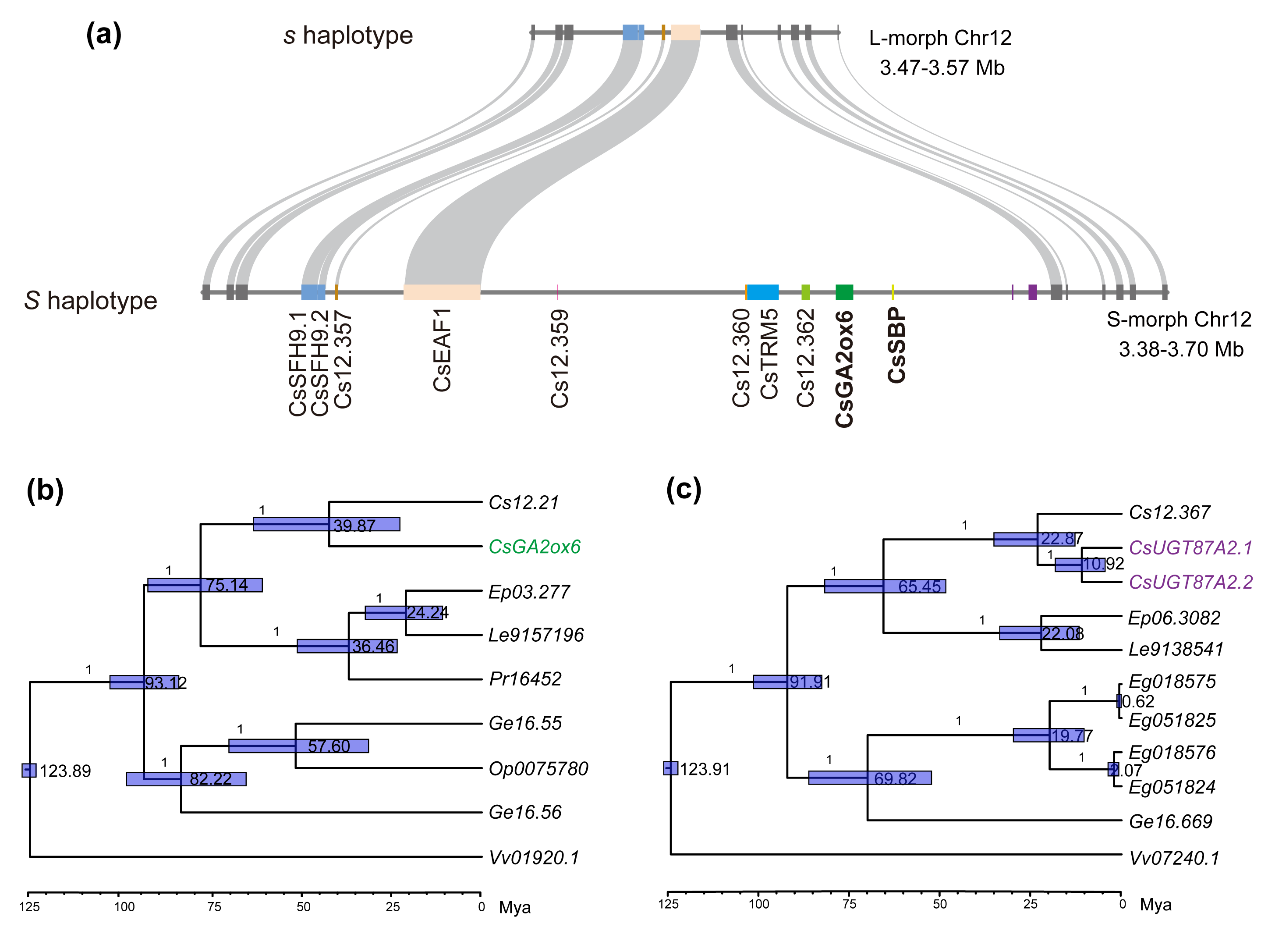
Fig. 1. Hemizygous structure and stepwise duplication origin of the S-locus supergene in Cordia subcordata.(Image by SHI et al.)
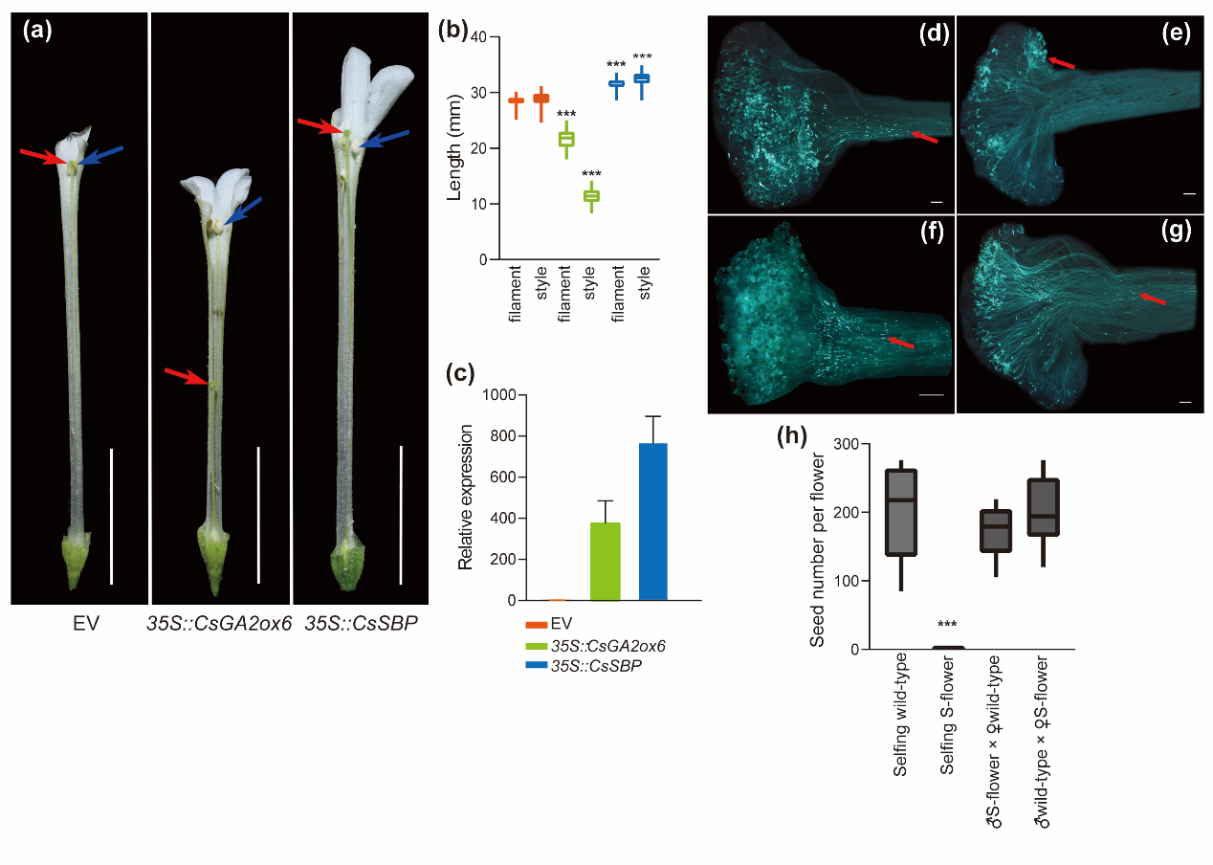
Fig. 2. Overexpression of CsGA2ox6 in tobacco resulted in pronounced style shortening and self-incompatibility.(Image by SHI et al.)
File Download: