Unraveling the Taxonomic History of Scutellaria formosana: A Hundred-Year Quest
In 1894, a flowering Scutellaria plant from the Veitch & Sons nursery was described by the British botanist N. E. Brown as a new species, Scutellaria formosana Brown (Fig. 1). It was characterized by having glabrous stems, ovate leaves nearly obtuse at the apex, broadly cuneate at the base, inconspicuously toothed at the margin, and glabrous on both sides, minutely puberulent pedicels and calyces, and a white corolla with a pale green-tinged tube, a blue-violet upper lip, and a white lower lip. Brown considered S. formosana to be closely related to S. javanica Junghuhn (Fig. 2), which is widely distributed in Southeast Asia, and possibly a local form of the latter. However, he noted significant differences in plant size, stem and leaf indumentum, leaf shape, and flower size and color between these two species.
The type locality of S. formosana was previously considered to be Hainan
The type locality of S. formosana has been contentious. The plant was sent to the Veitch & Sons by C. Ford, then curator of the Hong Kong Botanic Garden, and was said to be from Taiwan (Formosa) or Hong Kong (Lantau Island). However, even C. Ford was uncertain of its exact origin. The British botanists S. T. Dunn and W. J. Tutcher suggested in 1912 that it came from Lantau Island, Hong Kong. The Japanese botanist B. Hayata stated in 1919 that he had not seen S. formosana in Taiwan. In 1927, the American botanist E. D. Merrill argued that the type locality of S. formosana was actually Hainan, not Taiwan or Hong Kong. Later, it became generally accepted that the type locality of S. formosana was Hainan Island.
Scutellaria formosana was previously recognized as an independent species
The status of S. formosana as an independent species was widely accepted by most researchers. S. T. Dunn and W. J. Tutcher also held this view in 1912. However, in 1915, S. T. Dunn merged it into S. javanica, and E. D. Merrill also considered S. formosana to be synonymous with S. javanica. Nevertheless, subsequent researchers consistently recognized S. formosana as a distinct species, which was distributed in Fujian, Guangdong, Hainan, Jiangxi, and Yunnan provinces of China.
Two Questions
Where is the true type locality of S. formosana? Is S. formosana truly an independent species? With these two questions in mind, we conducted an in-depth study.
The type locality of S. formosana is Hong Kong, not Taiwan or Hainan
First, we examined nearly all correctly identified specimens of S. formosana in major herbaria all over the world. None of these specimens were from Taiwan or Hainan. Since S. formosana does not occur at these two locations, could it possibly come from the Lantau Island, Hong Kong, as suggested in the protologue? Fortunately, we were able to trace four collections of S. formosana from Hong Kong, one of which was exactly from the Lantau Island (Fig. 3). This study revealed that these specimens generally matched the type specimen of S. formosana. Thus, we can conclude that the type locality of S. formosana is the Lantau Island of Hong Kong.
Scutellaria formosana is conspecific with S. stenosiphon
Next, we compared S. formosana with all known species from China and Southeast Asia. We found it distinctly different from S. javanica but remarkably similar to an earlier published species, S. stenosiphon Hemsley (Fig. 4), described by the British botanist W. B. Hemsley in 1890. Similarly, S. stenosiphon was also described from cultivated material. It was originally collected by C. Ford in 1884 from Luofu Shan area in Guangdong and cultivated at the Hong Kong Botanic Garden. Later researchers all recognized S. stenosiphon as an independent species, but no specimens of this species had been collected again in over 140 years thereafter. With the assistance of this friends, including Mr. Zhengxu Ma, we obtained high-resolution images of the type specimens and detailed parts of both S. formosana and S. stenosiphon. Finally, after careful comparison, we concluded that S. formosana and S. stenosiphon are conspecific. Due to the earlier publication date of S. stenosiphon, it has priority over S. formosana, and therefore S. formosana should be reduced to the synonymy of S. stenosiphon. This study also revealed that S. stenosiphon is distributed only in Fujian, Guangdong, Jiangxi, and Hong Kong, and is not found in Hainan or Yunnan.
A New Question: Is Luofu Shan definitely the type locality of S. stenosiphon?
According to the protologue and type specimen, S. stenosiphon was collected from Luofu Shan over 140 years ago and transplanted to the Hong Kong Botanic Garden. However, is Luofu Shan its true collection site? The Luofu Shan region is a relatively well-botanized area, yet no specimens of this species have been recollected there over the years. Currently, specimens of S. formosana collected from Boluo county, Guangdong, were all collected from the nearby Xiangtou Shan. We also collected specimens of this species from Xiangtou Shan (Fig. 5), which are indistinguishable from S. stenosiphon. Therefore, the type locality of S. stenosiphon is likely not Luofu Shan but Xiangtou Shan, although this conclusion requires further investigation for verification.
The related findings have been published online entitled ‘Taxonomic studies on Scutellaria (Lamiaceae) from China (Ⅱ): the identity of S. formosana and its variety, S. formosana var. pubescens’ in the renowned international journal in the plant taxonomy, Phytotaxa. Dr. ZENG Youpai from the Herbarium of South China Botanical Garden, Chinese Academy of Sciences, is the first author and corresponding author of the paper. Other staff from the herbarium also participated in the research. This study was supported by the Small Grants Program for New Records and Rediscoveries of Rare Species initiated by Tencent Foundation and Shan Shui Conservation Center. Article link: https://doi.org/10.11646/phytotaxa.730.2.2
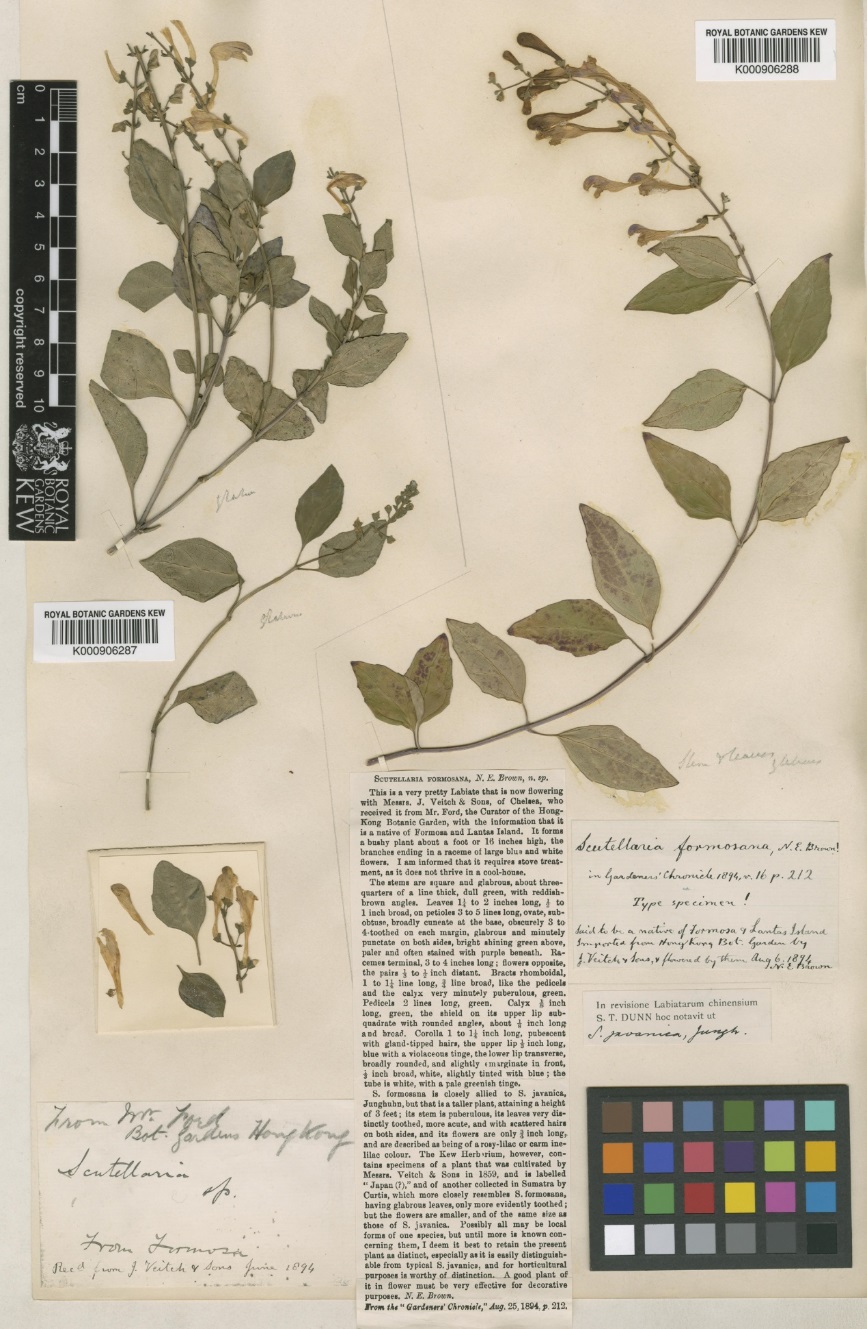
Fig. 1. Type specimen of Scutellaria formosana (= S. stenosiphon).(Image by ZENG et al.)
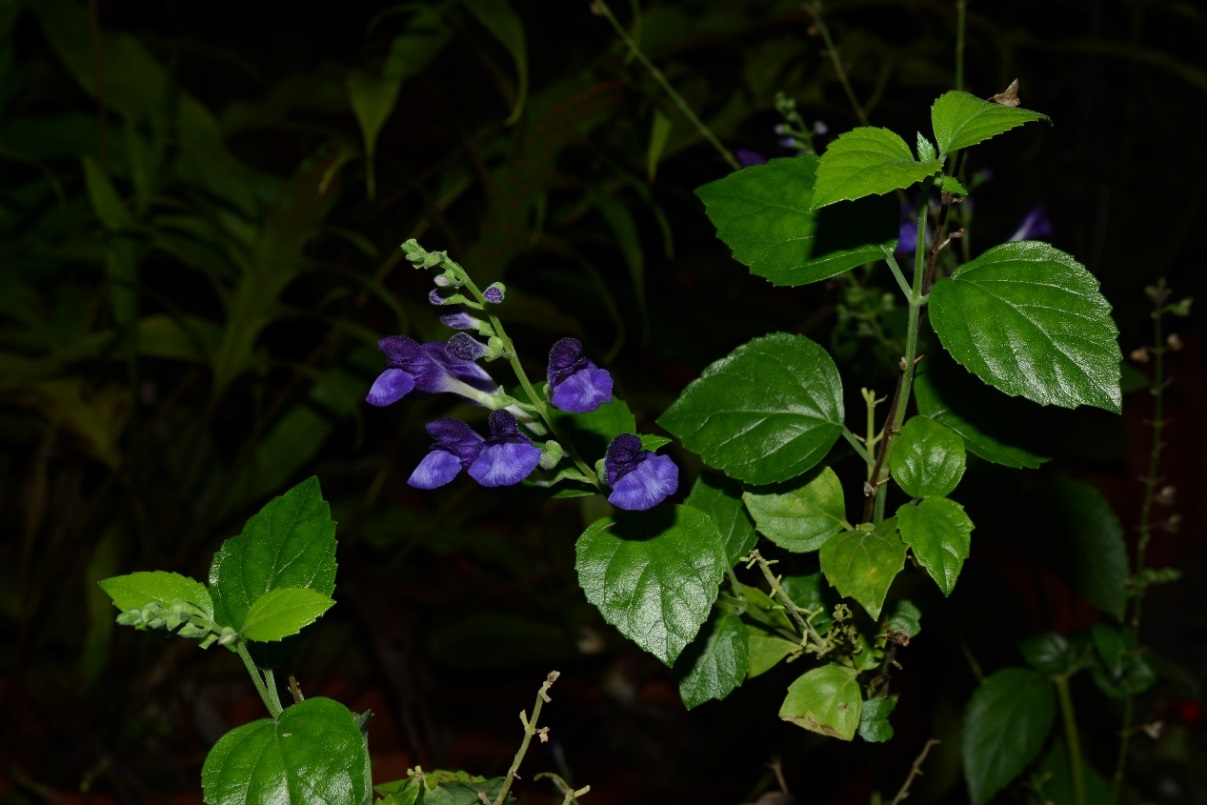
Fig. 2. Living plant of Scutellaria javanica.(Image by ZENG et al.)
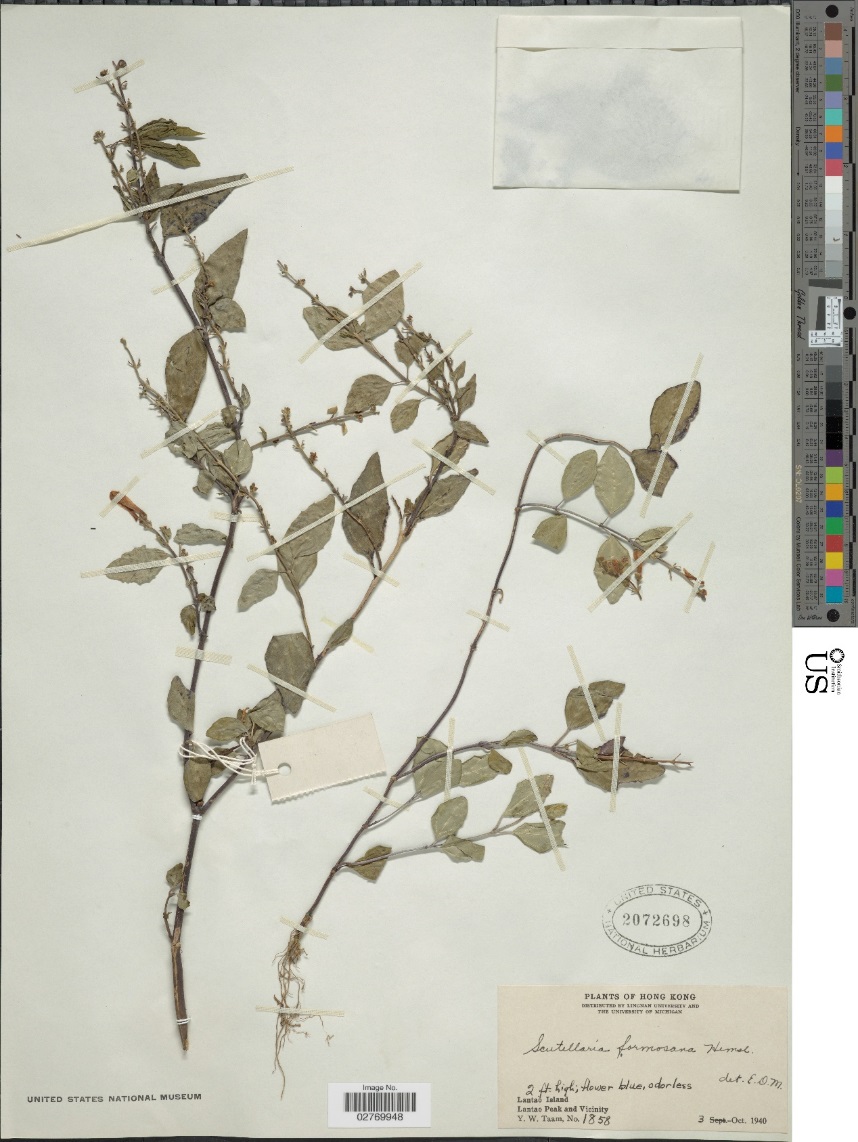
Fig. 3. A specimen of Scutellaria formosana (= S. stenosiphon) collected from the Lantau Island in Hong Kong, China.(Image by ZENG et al.)
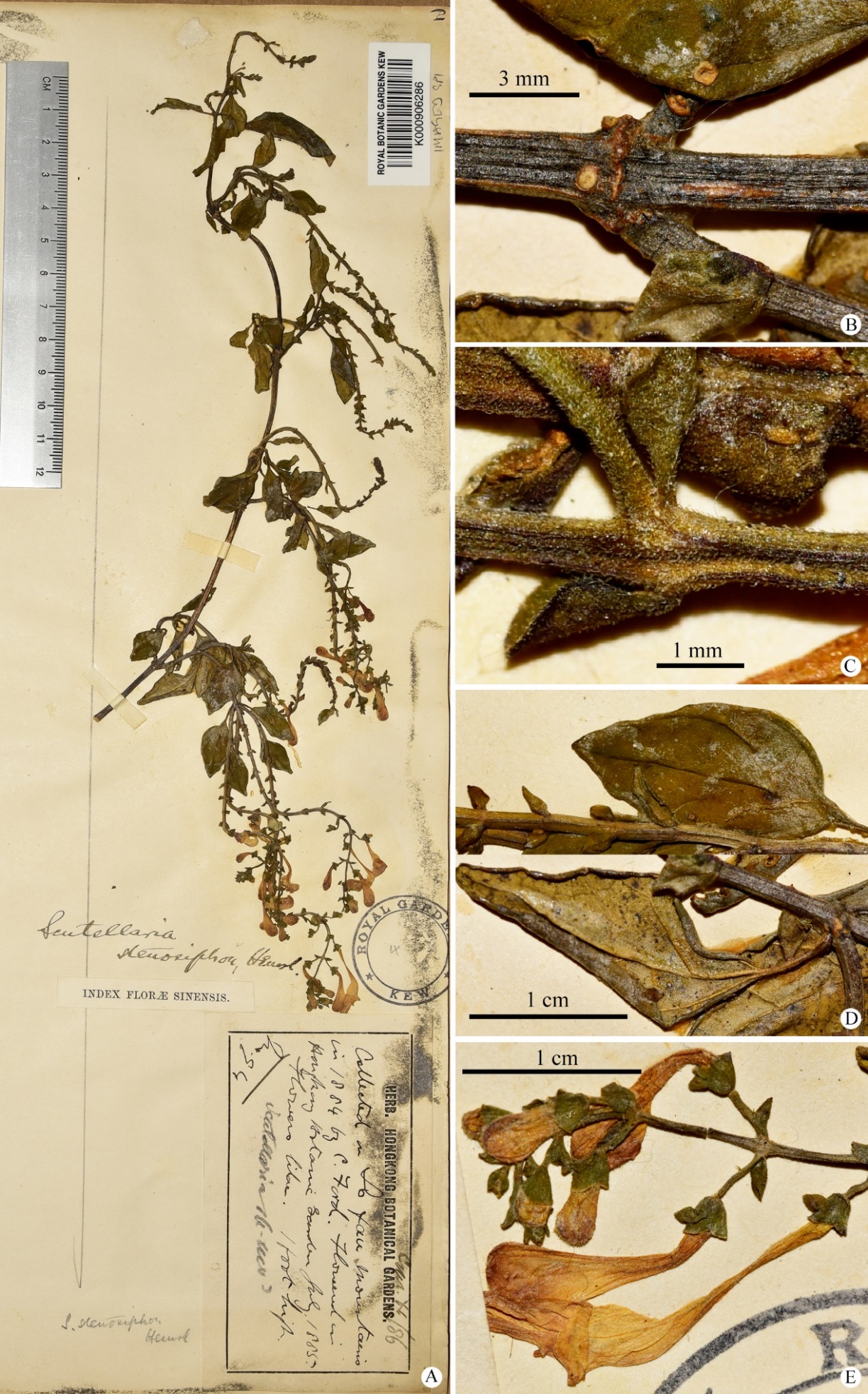
Fig. 4. Type specimen of Scutellaria stenosiphon, showing close-ups of the stems, leaves and flowers.(Image by ZENG et al.)
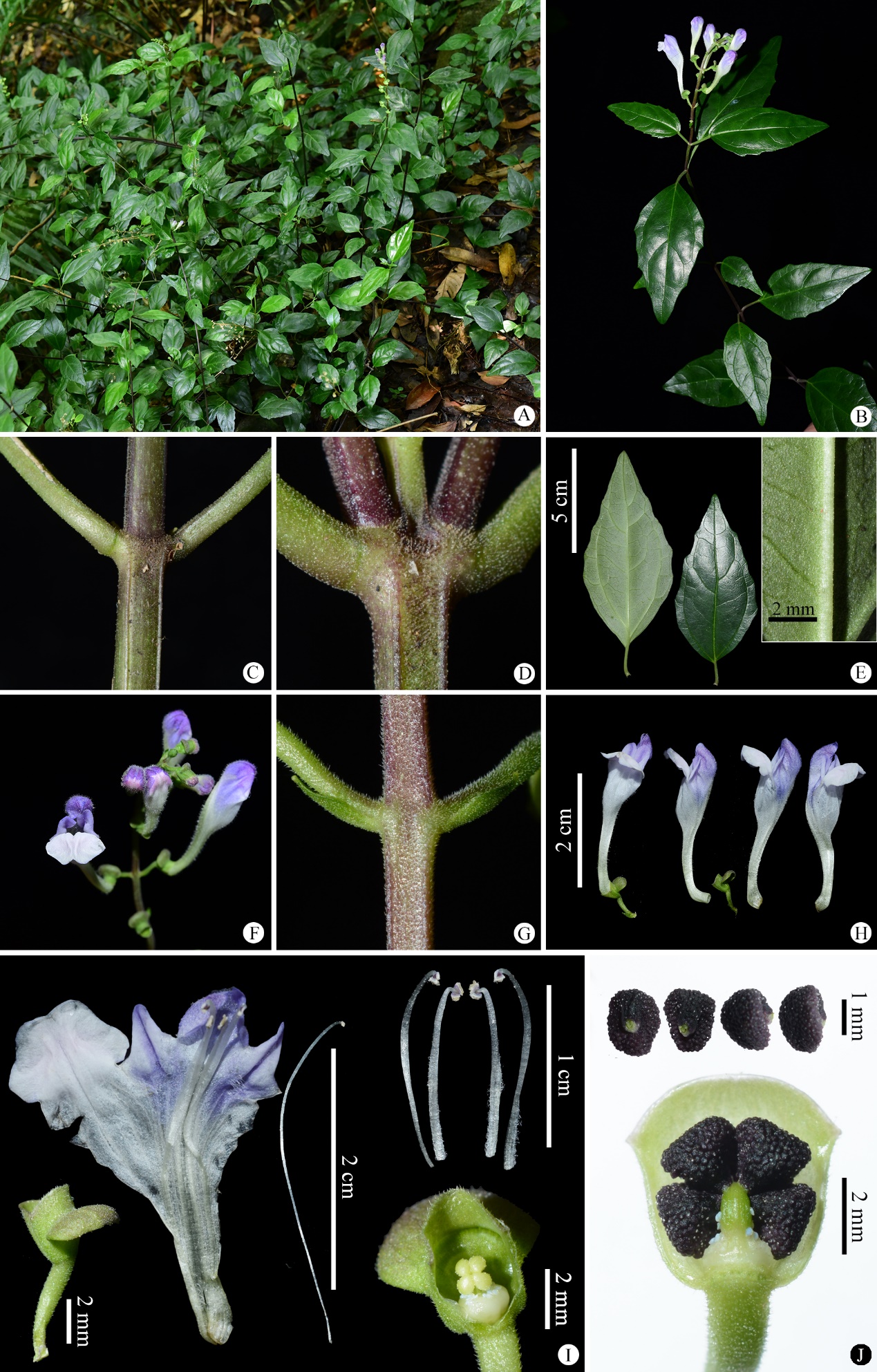
Fig. 5 Scutellaria stenosiphon in the wild (Xiangtou Shan in Boluo, Guangdong, China).(Image by ZENG et al.)
File Download: